Health visitors in south Wales set to strike after NHS employer ignores job evaluation appeal
Clinical
Bowel cancer is the fourth most common cancer in England, and with one in 20 people developing the condition, it is the second highest cause of
The Health Equality Framework (HEF) is a tool that records the work of learning disability clinicians to address the health inequalities experienced by a pe
There has been a move in children’s services to encourage greater participation by children themselves in how those services are designed and run.
The Mental Capacity Act framework is essential to ensuring good practice in the treatment of people in vulnerable circumstances.
A growing body of literature documents multiple morbidities and multiple medication use among older people with intellectual disabilities.
<p>How prioritising the person and what makes them happy has transformed the lives of eight hard-to-help residents with learning disabilities in supported living accommoda
Image

There has been a move in children’s services to encourage greater participation by children themselves in how those services are desi
Image
The Health Equality Framework (HEF) is a tool that records the work of learning disability clinicians to address the health inequalit
Image

Supervision is an important resource for nursing and there is an extensive evidence base to support its use.
Image
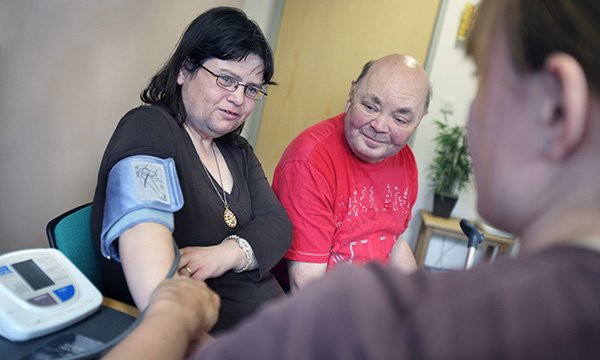
Increased life expectancy allied to increasing numbers of people with learning disabilities living in the community means that more people with learning dis
Image

Mindfulness is used increasingly by nurses to help people with a learning disability – and their carers – to manage difficult emotions or situations.
<p>At 19 Jonathan Beebee confounded doctors by making a full recovery after a violent attack.
This article reports on a Queen’s Nursing Institute funded project that ran in 2015. The project was commissioned to improve the uptake of the national bowel cancer screening programme by people with learning disabilities.
Seclusion has been found to be used disproportionately in the learning disability population, even though its effectiveness has not been proven and it is recognised to have a potentially traumatic effect on participants.
People with an intellectual disability who aspire to further education, and who seek employment on their transition to adulthood, need access to a range of supports, for independence, personal and educational development, and collaborative transitioning.
Background The personal grief of nurses who care for the palliative needs of children with an intellectual disability has rarely been investigated.
NHS Education for Scotland is working with higher education institutions and other partners to contribute to recommendations outlined in Strengthening the Commitment, the UK-wide review of learning disability nursing.
This article describes the evaluation of a group intervention designed to promote the improved recognition and positive management of emotions in adults with a mild to moderate learning disability.